
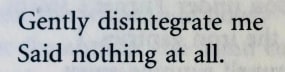
holding notes ii.
the hermit, sick writing, reading

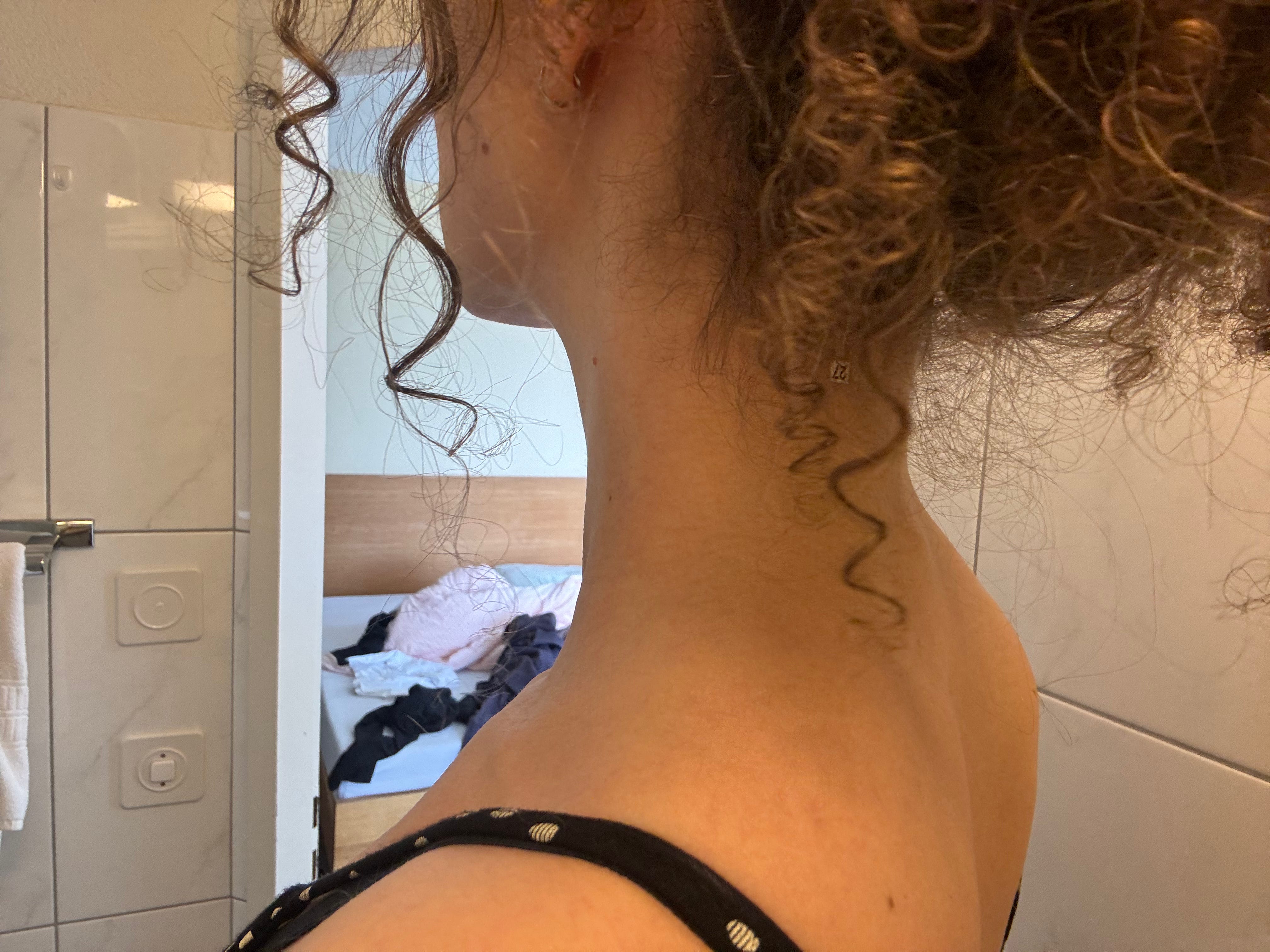
Last week, staying in a hostel in the Swiss Alps, I found an upside down 27 sticker on the back of my neck. Naturally I fielded interpretations on instagram: several people mentioned surviving the 27 club (true, but a while ago now); others pointed out its resemblance to the sticker found under Laura Palmer’s nails in Twin Peaks. My favourite response was from E, a painter, who flung some Alejandro Jodorowsky my way:
2+7=9 which is the hermit tarot card
Could be a positive crisis
Absent cold father
Devotions
Altruism
A secret teacher
A male teacher
Prudence
Saturn
Humility
And obviously solitude
Earlier in the year I did tarot with my friend Carle (who has the best deck I’ve ever seen: from New Woman magazine in the hallowed year 2000) and drew The Hermit for my Q2 (May, April, June). This has felt, for better and worse, extremely accurate. A lot happening behind the scenes, things that have been in motion for years that are almost — but not quite — ready to share. I’m at the fun stage with the novel that will come out next year: conversations about the copy, cover, design. In September I move to Cambridge to take up a fellowship for nine months, where I will be thinking about waste and fatigue, and hopefully ferment those thoughts into a different book.
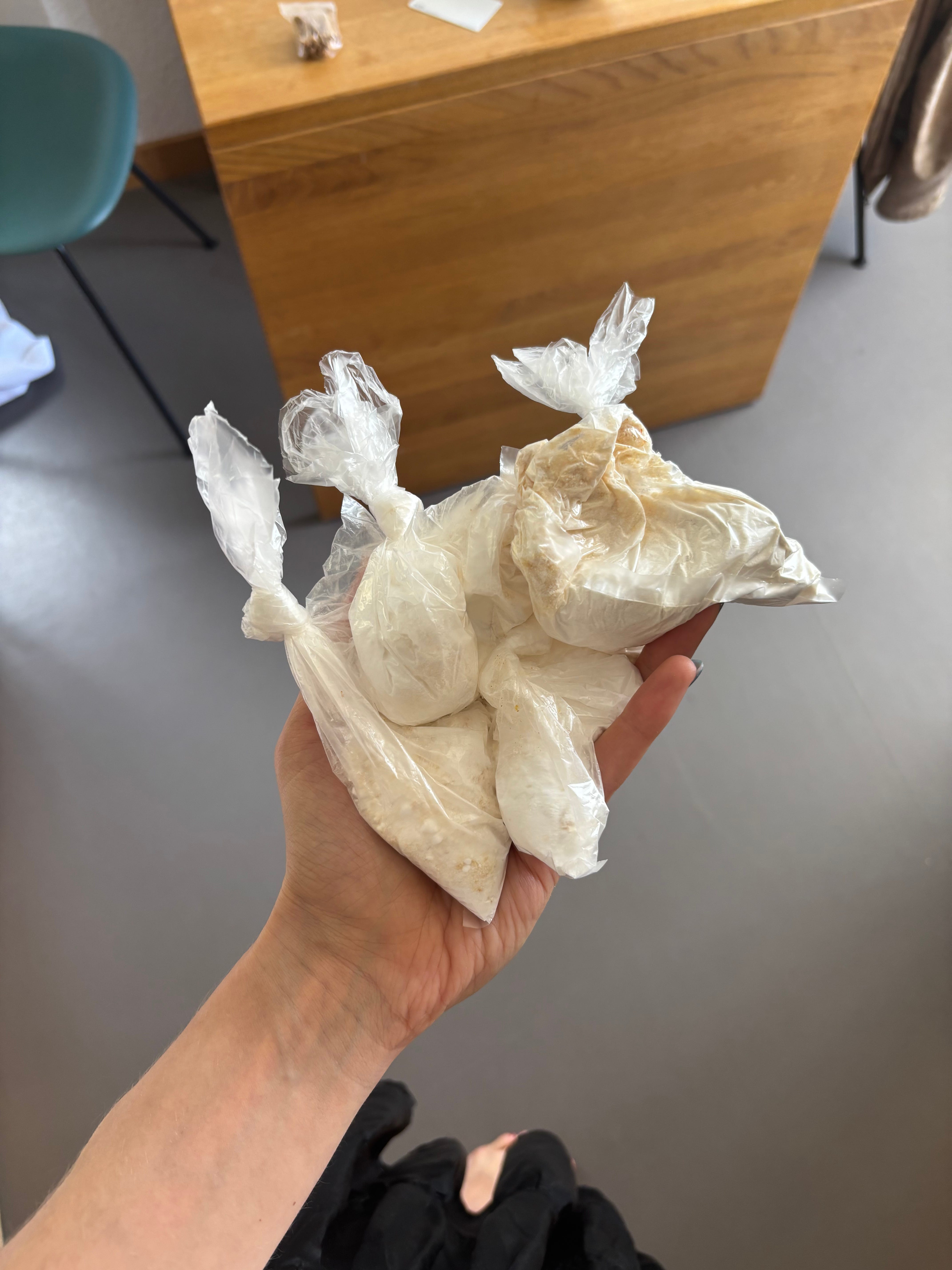
I’m also one month into a complex protocol that takes nearly all my attention (and income) to follow, but which so far seems to be paying off. I can stand up without immediately feeling like I’m going to pass out, I’m sleeping, and the severe brain fog — which has often, terrifyingly, felt like irreversible damage to my cognition and memory — is waning, a bit. At the outset I took a handful of tests which revealed a fuck-tonne of deficiencies and malabsorptions I didn’t even know I had, and which seem to be driving everything else. The protocol involves over sixty daily supplements, electrolytes, amino acids, sublingual minerals, plus low dose naltrexone, all of which have to be measured out and taken at specific intervals. When I travelled last week all these suspicious-looking bags of powder and phials of liquid took up more than half my baggage. I feel like I’ve been in the sick game for long enough now — the kind where the NHS doesn’t know what to do with you — that I don’t bat an eyelid at how much all this costs. It’s not that the money isn’t a worry, because it always is; it’s more like I’ve just depressingly normalised the fact that crawling out of this particular Sisyphean hole month on month is more expensive than rent.
I see The Hermit as a card of sickness, sickness as a form of unwanted knowledge, an epistemology embodied against your will. One that sharpens isolation even when you are so apparently in the world. I should be grateful for the small increase in energy the protocol has so far permitted — but instead I feel greedy, petulant. I’ve glimpsed normality and I want out of the hermitage. More than anything I would like to be able to eat again, with friends, without intricate planning and having to carry my own ‘safe foods’ whenever I go. The irony isn’t lost on me that my diet is now even more restricted than when I had an eating disorder in my early twenties, and I sometimes think about how the two might be connected — how the stress of deprivation on my metabolism may have contributed, a decade later, to my body perceiving almost all food as threat. I have to imagine a future in which I can eat cheese, chocolate, avocado, sourdough, or drink alcohol, without weeks of immune backlash, otherwise I will go insane. But at least I still have crisps, and microdosing.
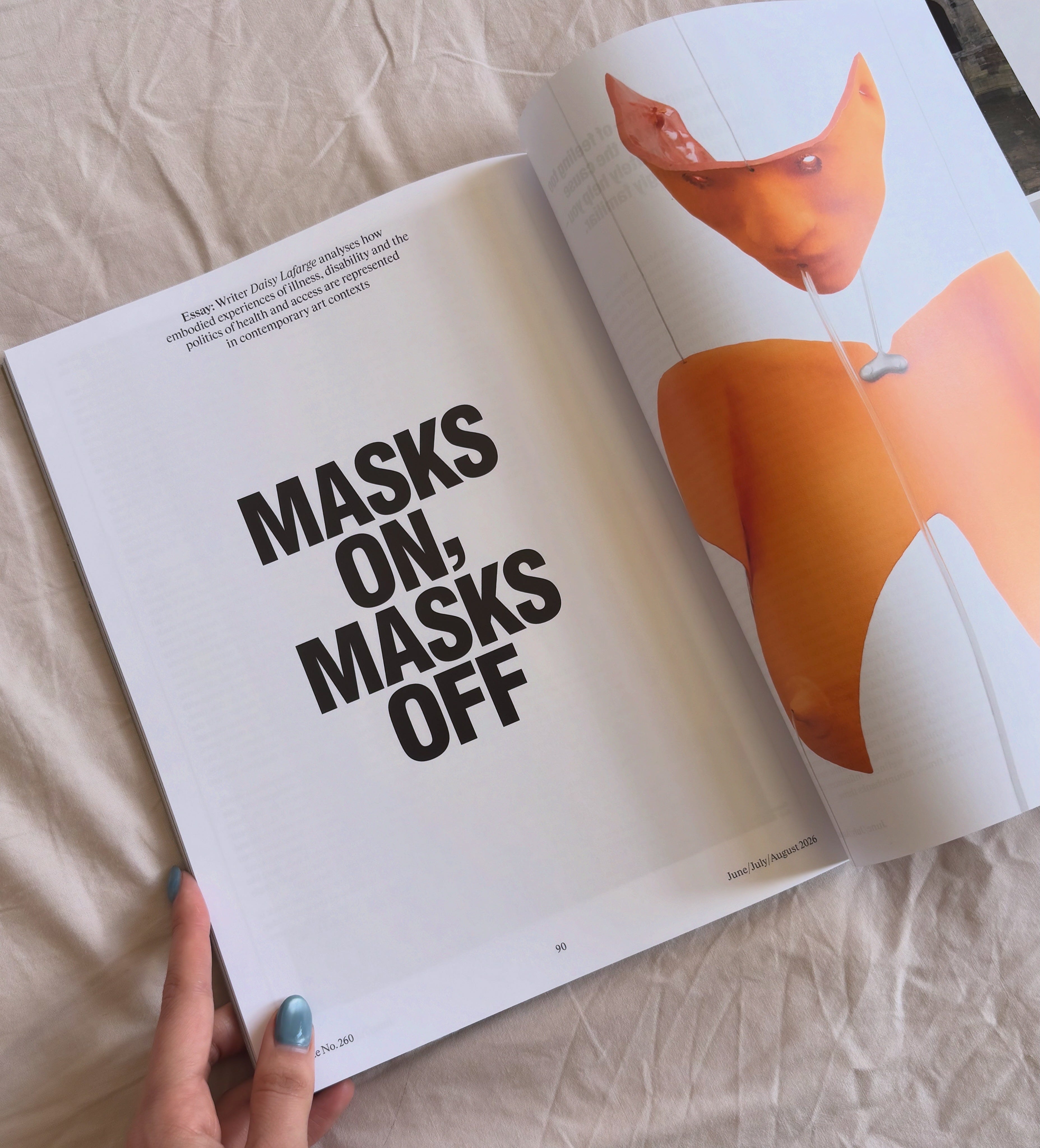
Relatedly, I loved this conversation between Amber Husain and Emily Wells, on the politics of food and appetite, and Simone Weil and Eleanor Marx among others. I’ve been revisiting Amber’s work in general as I’m writing an introduction to Replace Me, which is being reissued later this year. I’ve also had two pieces of sick writing published: a feature in the Summer issue of frieze, on several shows engaging with illness and disability, and an essay that first appeared here about Marx’s water cure and my trip to Karlovy Vary, accompanying a centenary republication of Virginia Woolf’s On Being Ill. The book is out now, and I’ll read at a launch event at the Freud Museum in September. The protocol has also come with some nasty side effects, so for now I’ve had to scale back on physical events while I adjust. I’m excited for PACING & SPACING: Crip Process, Form and Reception in Art and Writing — a one day symposium this Friday organised by Becky Beasley in connection with her solo exhibition at QUAD Derby. I’m no longer able to present in person, but there are tickets for remote participation if you’d like to watch from home.
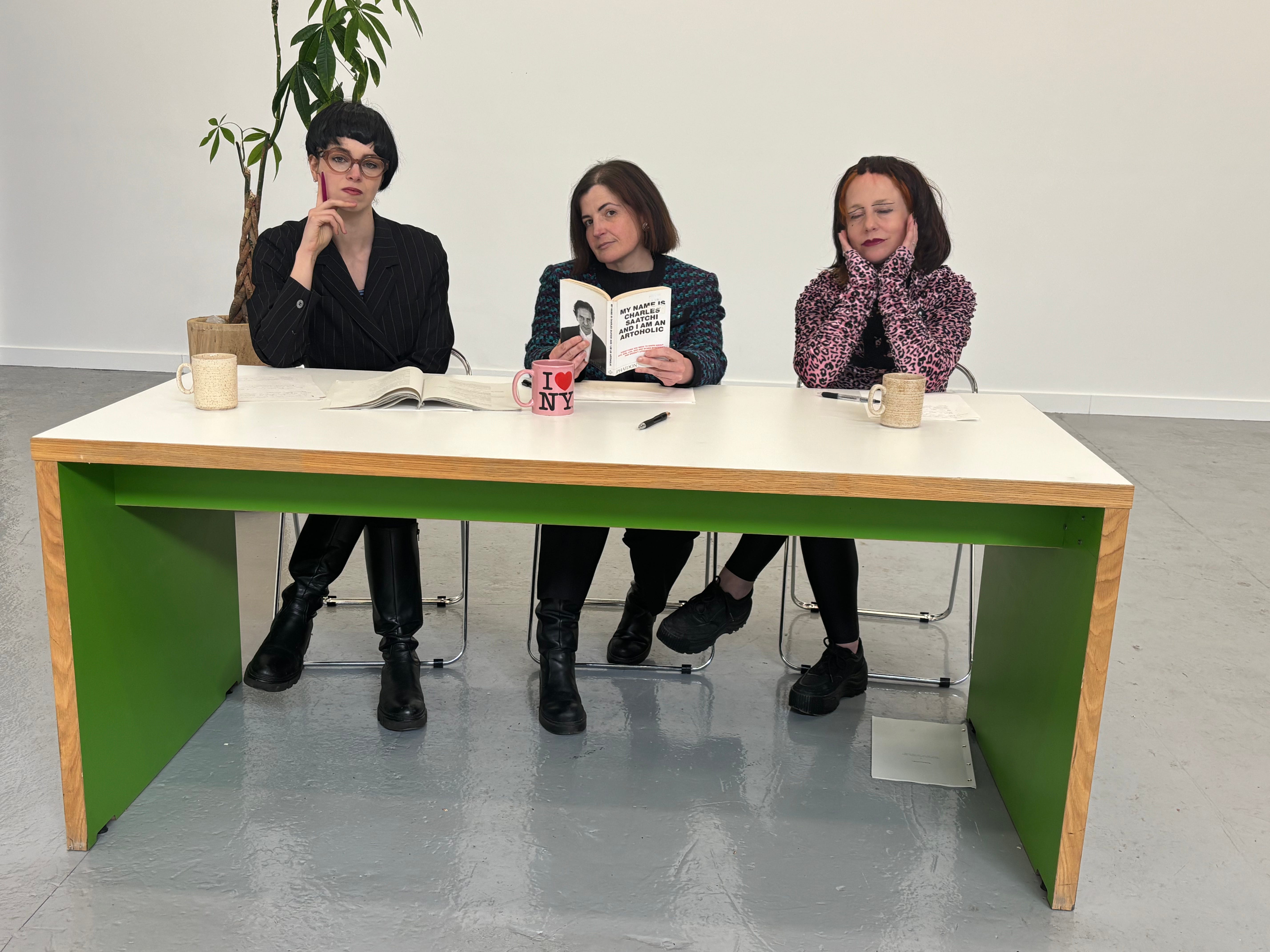
I planned my Swiss trip so that I’d be back for the opening weekend of Glasgow International, but somehow miscalculated and forgot that I would need the whole weekend to recover from travel. I was mostly horizontal but made it to one opening — Lisette May Monroe’s Hard Lines at Gulabi, which has a gorgeous publication with poems by Rachael Allen and a conversation about revenge between Lisette and Hannah Proctor. Otherwise I’m going to spend the next week/s prioritising David Wojnarowicz at The Modern Insitute, Renèe Helèna Browne’s film Flat at The Briggait, Jamie Crewe’s Defiling Rain and the infamous Milngavie Columbo film/installation/cultural phenomenon, in which Columbo investigates a spate of murders in Glasgow’s prosperous suburb of Milngavie following a successful Guggenheim bid. It’s written by Jamie Bolland, Hussein Mitha, Nadia Rossi, Bex Šik and Joey Simons, but also seems to involve almost everyone I know, including me — I play an unimpressed curator from Guggenheim Bilbao. It’s on at Govan Project Space until 21st June.
This is a holding note for the things I actually want to write here, which aren’t really compatible with the speed that substack seems to prefer. I thought I might be able to train myself into regular breezy dispatches, but I’m probably doomed to slow, chewy essays. I’m still working on something about Flaubert’s letters, and the next part of the Simone Weil travel series — it’s also not long until the Routledge Companion to Simone Weil publishes, which includes a chapter by me on Weil’s influence on contemporary art via Chris Kraus, Thomas Hirschhorn and Serena Nono. One of the editors and I are hopefully going to organise a Simone Weil + poetry colloquium in the autumn (more details soon if we actually pull this off).
Otherwise I’ve been loving We the Bacteria by Beatriz Colomina and Mark Wigley, on how microbial life invented architecture and continues to shape it, Juliana Spahr’s Ars Poeticas and Dreaming in the Fault Zone: A Poetics of Healing by Eleni Stecopoulos. I want to watch A TV Dante, and I’m preparing for the boxes of ~180 poetry collections that will soon inundate my flat; the 2026 T.S. Eliot Prize, which I’m judging with Leontia Flynn and Ishion Hutchinson, is open for submissions until 31st July.
More (and the next sanatorial) soon x
Congrats on the fellowship in Cambridge !!