
what I loved
my favourite (new and old) reading in 2025

Just as I started writing this my boyfriend walked in and said ‘are you allowed to do the book list thing if you haven’t read the books?’, which is probably the clearest indication I’ve had that, yes, we are oversaturated with book lists. I don’t think this is a bad thing though. I think lists are how melancholics deal with (or fail to deal with) the problem of the future. I have lists of what I’ve read going back to 2014 - something I started doing because I noticed my tendency to metabolise books too quickly, like it was a race to put distance between the current book and the one I’d just finished. As a way to slow down I started listing in the back of my diary, and marking and copying out passages. It’s satisfying to be able to look back at what I was reading at a given moment (this time ten years ago: Ice, Anna Kavan; Molecular Red, McKenzie Wark; Spinoza, Gilles Deleuze; Good Morning, Midnight, Jean Rhys).
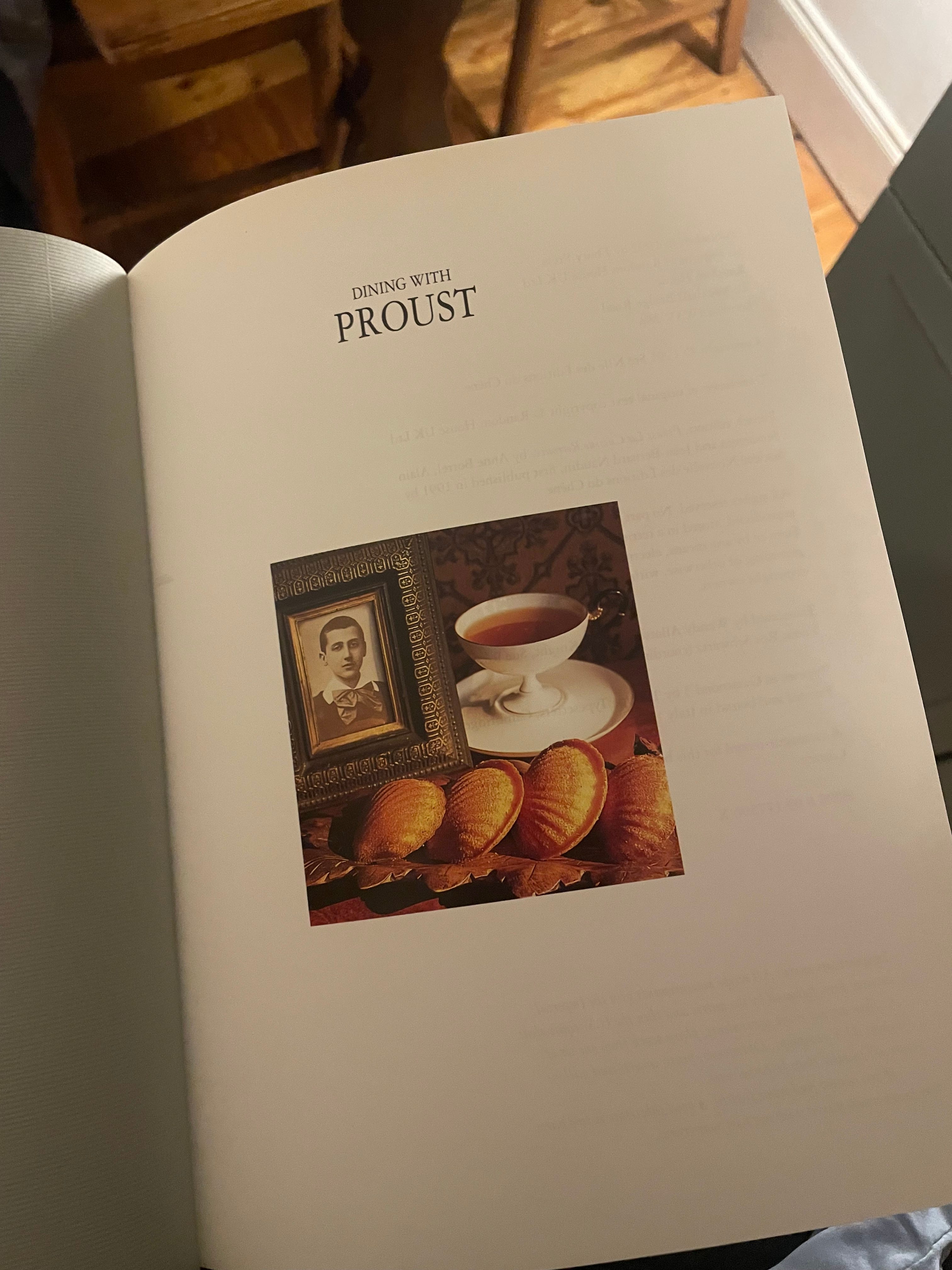
In any other year this would have been a good year for reading; unfortunately I read Proust last year which meant everything I’ve read since has been in its shadow and made me feel sad that it’s not Proust. My main advice for reading In Search of Lost Time is to prepare for the comedown. I read Edmund White’s Proust as a chaser between last Christmas and New Year, but I wish I had also prioritised Christine Smallwood’s La Captive and tracked down a copy of Jacqueline Rose’s Albertine (can anyone lend me?) to draw out the mourning period. In January I went to Paris for my birthday and visited Proust’s bed (uncomfortable looking) and ate in Bofinger (no record that he went there but it’s still passably Belle Époque), then when I got home I ordered the beautifully tacky Dining With Proust. I’m allergic to most of the recipes but it’s worth it for the copywriting alone.
Fiction
I read a lot of fiction this year, in part because I judged the Betty Trask Prize and had to read 30+ debut novels. The tastes of my two fellow judges and I didn’t always align but miraculously we all agreed on the winner - Ashanti Lewis’s astonishing Winter Animals, which follows a group of privileged kids slumming it in an abandoned ski resort, with dreams of starting up a Fourierist commune. It wears its smartness lightly, and the dialogue often reminded me of the stilted Fourier scene in Whit Stillman’s Metropolitan; in other words, it was perfect.
My favourite fiction in translation discovery was the Danish author Harald Voetmann, whose loose historical trilogy ‘about mankind’s desire to conquer nature’ is being published in the UK by Lolli Editions (trans. Johanne Sorgenfri Ottosen). I started with Sublunar, which follows the sixteenth century astronomer Tycho Brahe, and then I read Awake, written from the perspective of Pliny the Elder. The third (Visions and Temptations, forthcoming) is about an eleventh century mystic and I hope it will be as seedy and disjointed and baroque as the other two.
I didn’t keep up with many novels published in 2025, but of the ones I did read my favourite was probably Pan by Michael Clune, which follows a teenage boy trying to deal with the onset of panic attacks, and who comes to formulate a weird cosmology around the idea that he’s possessed by the Greek god Pan. There were parts of it that didn’t quite work but which I appreciated, because I could sense the author trying to get at something just out of reach, rather than rely on what would make for smoother, more familiar reading. It’s a novel of friction and ragged edges. My other highlights were Nymph by Stephanie LaCava (whose London event I was sadly too sick to chair), Ghost Driver* by Nell Osborne and Lili is Crying* by Hélène Bessette (trans. Kate Briggs). I also admired Vijay Khurana’s The Passenger Seat.
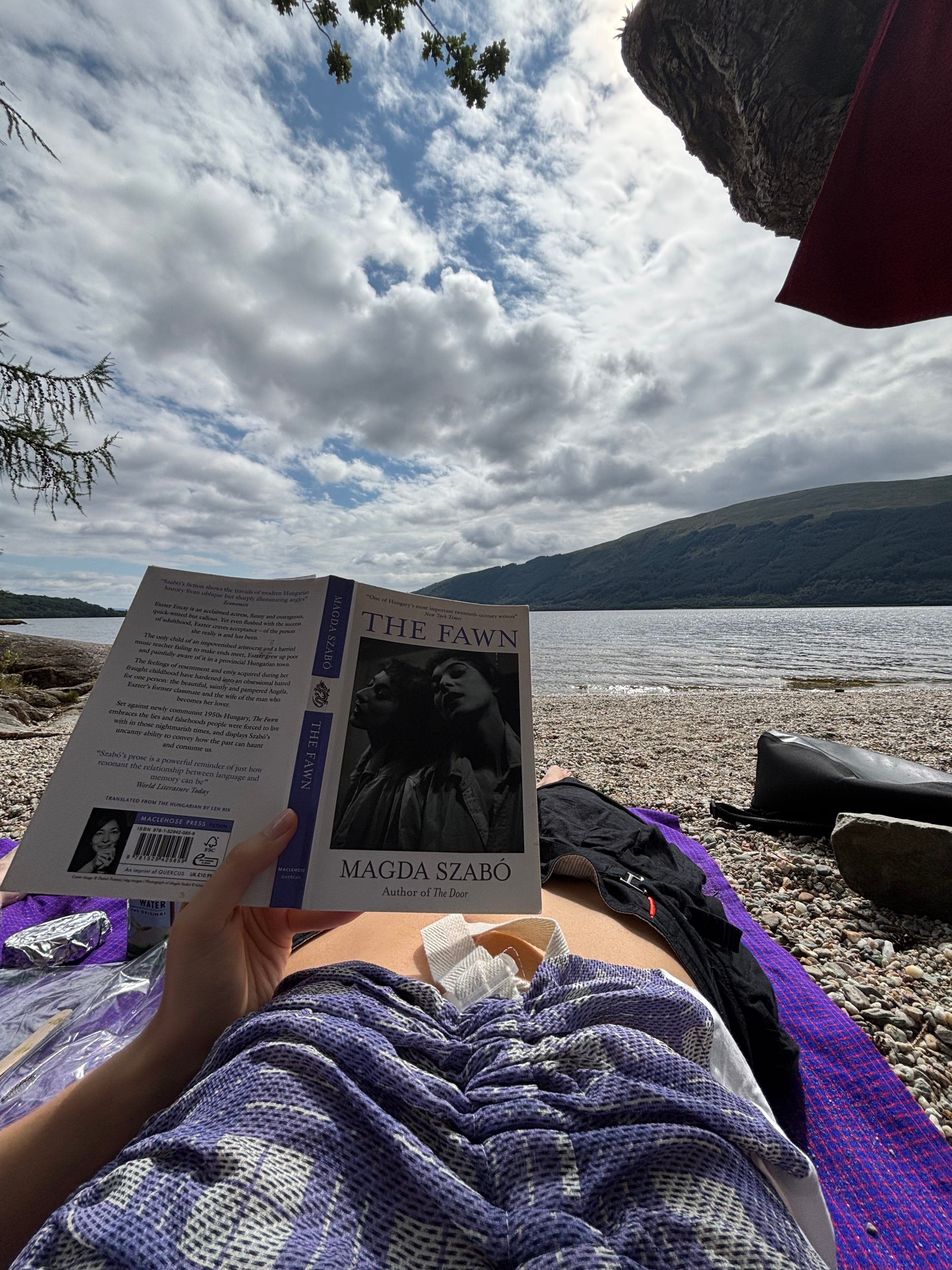
Of the older novels I read this year the standout was Monsieur Teste by Paul Valéry which I’d been meaning to read for years but I’m glad I didn’t until now. Teste is Valéry’s alter-ego, a ‘monster’ borne from excessive self-awareness and an ‘acute disease of precision’, after an existential crisis led Valéry to renounce poetry and instead devote himself to philosophy, science and maths. Monsieur Teste is the cop in every poet’s head, and the Casaubon in every academic’s. By far my most pleasurable read at the level of the sentence was In Youth Is Pleasure by Denton Welch, who I want to read more of next year; I was also very haunted by Magda Szabó’s The Fawn and Young Törless by Robert Musil.
Nonfiction
I started the year with a proof of In Defence of Leisure* by Akshi Singh - a restlessly illuminating enquiry into figuring out your desires and shaping your life around them, via the work of Marion Milner, which I posted about over the summer. The book that probably had the biggest effect on my own work was psychoanalyst Dominique Laporte’s History of Shit, which was so exhilarating in both form and content. I’ve been thinking and writing a lot about sewers this year, both literal and metaphorical, and I’m so smitten with the poetic liberties Laporte takes with his subject (‘If language is beautiful it must be because a master bathes it — a master who cleans shit holes, sweeps offal, and expurgates city and speech to confer upon them order and beauty.’) I only found out that he died young, at 35, when I tried and failed to find more books by him - this makes History of Shit even more of a treasure.
My other highlights were Sad Tiger by Neige Sinno, which is as brilliant as everyone says, and I was also happy to discover In Defence of Secrets by Anne Dufourmantelle (recommended to me by the artist Ayla Dmyterko, whose show that I wrote a text for is on at Alma Pearl until the 10th of January). I also loved What In Me is Dark by Orlando Reade, which has inspired me to finally attempt Paradise Lost next year, and Dagmar Herzog’s The New Fascist Body which pulls together and historicises so much that’s both latent and explicit in the air at the moment, with regard to disability and what I’ve been calling - in conversations with friends this year on the literary and cultural state of things - fascist glamour. Herzog’s focus is on Germany and the AfD, and while it’s still broadly relevant it made me want to read a similar analysis specific to the UK (if you have a recommendation let me know).
Poetry
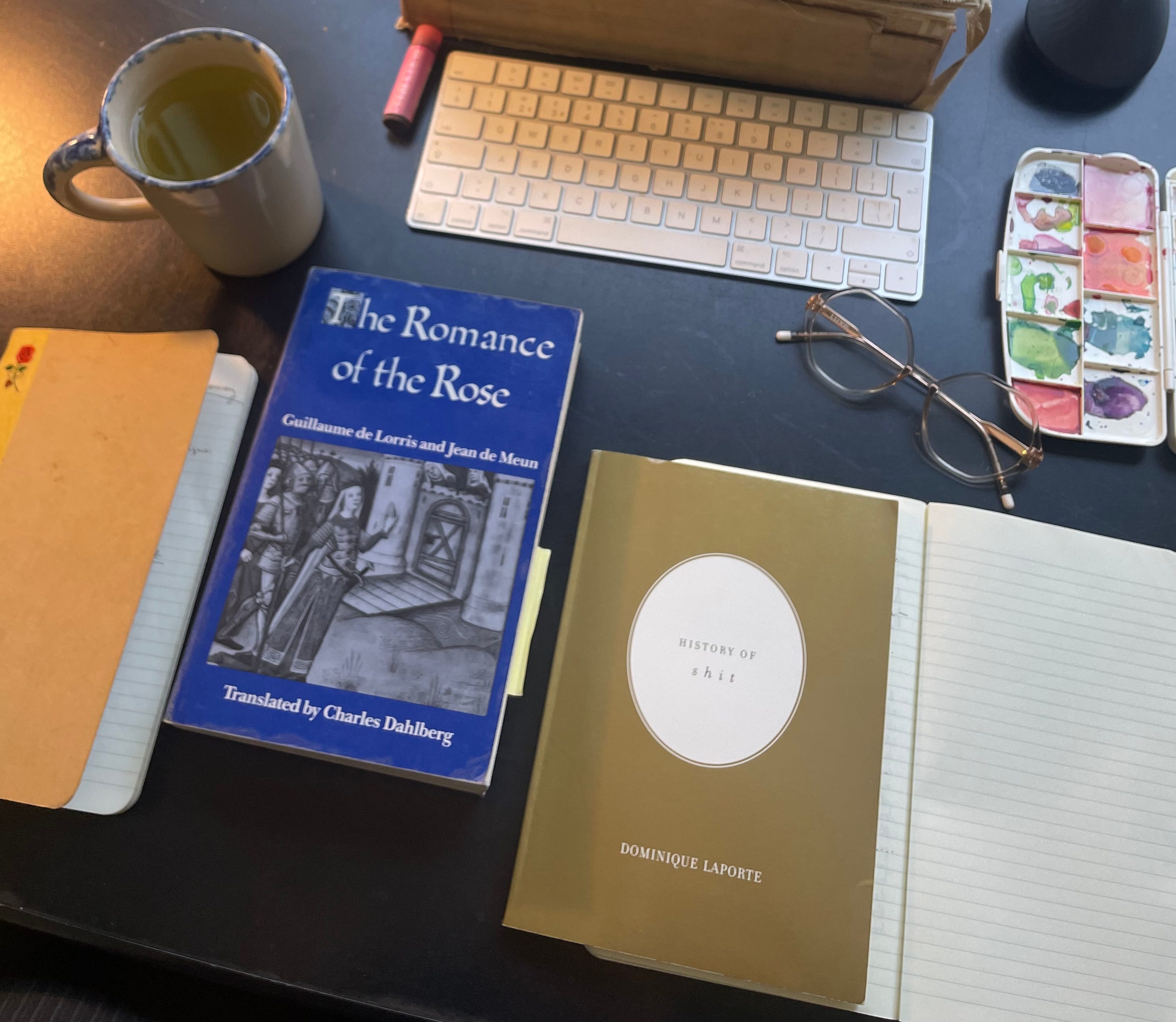
Another year in which I failed to read much poetry - it’s been like this since the pandemic, for reasons that change all the time. I probably had the most fun slogging through a thirteenth century dream vision, The Romance of the Rose by Jean de Meun and Guillaume de Lorris, during my tenth round of covid. I studied the illustrations at university but had never read the full text until this year; my take is that the Guillaume de Lorris part goes hard and then Jean de Meun got too Monsieur Teste about ‘finishing’ the book forty-five years later. Weirdly I found this opinion echoed while reading The Rose by Ariana Reines later in the year, which says ‘The Romance of the Rose is kind of boring / & mean—’. I had mixed feelings about The Rose, probably because its constellation of references is so overlapping with the poems I’ve been trying to write this year, but with an enviably gutsier sensibility; that said I felt completely awestruck by Wave of Blood, also published by Reines this year, which documents the undoing of time and life since October 7th, and then some unspooling millennia before that. My dear friend Dom Hale published a thorny, beautiful collection with The Last Books, First Nettles, and legend Oisín Roberts wrote the pamphlet of the year - Close to God - published by Burley Fisher Community Press; I loved them both. Just last week I read and felt jolted by the remarkable I have brought you a severed hand by Ghayath Almadhoun which made me remember why poetry at all.
Misc.
A new reading habit this year was reading plays aloud with friends, which I could not recommend more - we read Aimé Césaire’s A Tempest and then the OG The Tempest, but probably the most fun was an outdoor reading of Berta Lask’s Thomas Müntzer: A Dramatic depiction of the German Peasants’ War of 1525 on May Day, to mark 500 years since the Peasants’ War. It took around four hours in various locations in Pollok Park (it’s thematically important to incorporate big sticks), with a revolving cast of people coming and going. Sam Dolbear and Esther Leslie did the translation which has just been published by Rab-Rab Press. I also loved Sharon Kivland’s Envois: Love Letters from Jacques Lacan* which is here because it seems crude to file it under any of the above genres. In the last few months of redrafting a novel and losing my mind I got really into a puzzle game called Blue Prince - it was immensely therapeutic to apply the same kind of plot-brain to something that has the plottiness of a novel but isn’t writing, and has zero personal stakes. I still am yet to listen to a single audiobook - a concept for some reason I find deeply unappealing - but over the summer my boyfriend was reading The Divine Comedy and would read aloud from it in bed. I don’t think this counts as my having read it, but I loved falling asleep to it.
* I blurbed it
I’ve had Sublunar next to read a while & this has been encouragement to finally read it!